
Engineering
Industrial (process & mechanical) and civil engineering that turn your process requirements into reliable, well-integrated bulk handling systems.
See more
Industrial Engineering
Our plant engineering services for bulk material handling begin with a detailed assessment of product characteristics, process requirements, mechanical constraints and the existing plant layout. This process-driven design allows us to define clear functional requirements and develop a practical system design adapted to the production environment.
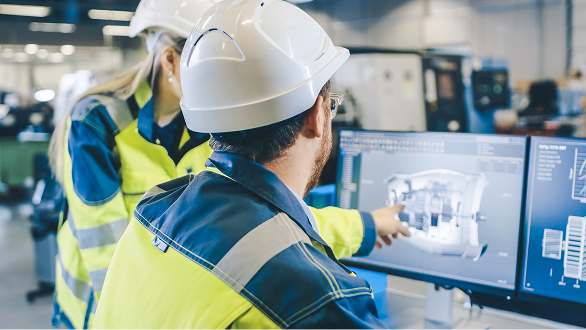
Combining materials handling engineering, industrial engineering for bulk handling and process engineering services, our team evaluates material flow design, equipment integration and interfaces between each handling stage. The goal is to ensure smooth material movement, consistent performance and reliable interaction between all components.
Every decision also considers accessibility, maintenance and long-term reliability. This structured approach helps identify risks early and delivers systems that integrate naturally into the plant and support stable, predictable performance over time.

Key Benefits
Our integrated approach brings clarity and alignment across all phases, ensuring each part of the project works together efficiently and performs as intended.
Process-driven system design
Engineering decisions are guided by a clear understanding of material flow, process behavior and actual operating conditions.
Optimized performance
Early process analysis ensures systems are correctly defined, reducing inefficiencies and ensuring long-term process efficiency.
Reliable operations & easy maintenance
System design prioritizes easy operation and maintenance, supporting stable and predictable day-to-day production.
Civil Engineering
Our civil engineering services support the safe and efficient implementation of bulk material handling systems. From the early design stage, we assess plant conditions, equipment loads, layouts and installation constraints to define suitable foundations & supports.
Close coordination between process engineering, structural engineering and equipment layout ensures that the structural design matches operational requirements and site conditions. This helps prevent misalignment, rework and delays during installation.
We also consider accessibility, installation sequence, maintenance needs and long-term operation. By integrating civil works with the overall system design, we create practical structural solutions that support safe installation, reliable equipment operation and efficient maintenance throughout the system’s service life.
Key Benefits
Our integrated approach brings clarity and alignment across all phases, ensuring each part of the project works together efficiently and performs as intended.
Process-driven system design
Engineering decisions are guided by a clear understanding of material flow, process behavior and actual operating conditions.
Optimized performance
Early process analysis ensures systems are correctly defined, reducing inefficiencies and ensuring long-term process efficiency.
Reliable operations & easy maintenance
System design prioritizes easy operation and maintenance, supporting stable and predictable day-to-day production.
Frequently Asked Questions
What is bulk material handling engineering?
Bulk material handling engineering is the discipline of designing the systems that move, store, dose and process dry bulk materials — translating process requirements into reliable equipment layouts, integrating the machinery, and providing the structural (civil) works to support it. ROCOM delivers both industrial (process and mechanical) and civil engineering for bulk handling projects, grounded in hands-on experience with the equipment itself.
What is the difference between industrial and civil engineering in a bulk handling project?
Industrial (process and mechanical) engineering defines the functional requirements, selects and integrates the equipment, and designs the material flow. Civil engineering provides the foundations, supports, structures and plant layout that physically carry and house that equipment.
Why does ROCOM combine process engineering with hands-on equipment experience?
Because ROCOM designs and supplies the actual bulk-handling equipment, its engineers understand real material behavior and operating conditions. This lets them anticipate challenges early and make practical decisions, rather than producing purely theoretical designs.
When in a project should engineering start?
As early as possible. A detailed evaluation at the concept stage — product characteristics, system requirements and mechanical constraints — defines functional requirements clearly and avoids costly rework later in design and installation.
Does ROCOM handle both the system design and the civil works?
Yes. ROCOM coordinates process design with civil works so that foundations, structures and equipment align from the start, avoiding misalignment, rework and delays during installation.
Related Services
Service & Maintenance
Our team provides responsive service and preventive maintenance assistance to reduce downtime and extend equipment life.
Spare Parts
We supply original spare parts quickly and accurately, helping reduce downtime and maintain reliable equipment performance.
Technical Consultancy
By combining process knowledge and practical experience, we identify reliable solutions that deliver technical and economic value.
Contact Us
We look forward to discussing with you!