
INDUSTRIAL
TECHNOLOGIES
Our technology scope covers the entire bulk material handling process: raw material reception, silo unloading, conveying, separation, dosing and flow control, through to the final delivery of end products in small bags, big bags or by bulk loading into trucks.
See all Industrial Technologies

 Magnetic Separation Equipment

 Slide gates

 Rotary Valves

 Vibrating Equipment

 Weighing & Feeding Systems

 Mechanical & Pneumatic Conveying
 Vacuum Cleaners & Dust Filters

 Filling & Emptying Systems

 Loading Chutes

 Packaging, Palletizing, Wrapping Systems
Vacuum Cleaners & Dust Filters
Heavy-duty industrial vacuum systems and dust collection (filtration) that recover bulk-material spills and capture airborne dust at the source across the plant.
We provide industrial vacuum cleaners and dust filtration systems designed to capture airborne particulates and clean bulk material spills throughout the plant.
Industrial vacuum cleaners are engineered to handle heavy-duty spill recovery and general plant maintenance. Unlike standard commercial vacuums, these high-capacity units are designed to safely collect large volumes of heavy, dense, or hazardous bulk materials directly from the factory floor, conveyors, and processing equipment.
Dust filters are permanently integrated into the processing line to capture airborne dust at the source—such as conveyor transfer points, silo vents, and bagging stations. By pulling dust-laden air through a filter media and exhausting clean air, they maintain a clean facility and keep airborne particulates from settling on your equipment.
How Industrial Vacuums Differ from Domestic & Commercial Vacuums
Industrial vacuums differ from domestic and commercial units through industrial-duty construction, specialized filtration and suitability for demanding production areas. HEPA & Hazardous-Dust Vacuums capture fine or harmful particles. ATEX / Explosion-Proof Vacuums address combustible dust risks. Wet & Dry, Continuous-Duty Vacuums collect solids and liquids during extended operation, while Centralized Vacuum Systems serve multiple extraction points.
Industrial Vacuum vs Dust Collector — What’s the Difference?
An industrial vacuum uses high suction to collect settled dust, powders, debris or liquids directly from floors, machinery and process points. A dust collector uses higher airflow to continuously capture airborne dust from production equipment, transfer points or extraction hoods and separate it from the air stream.
Compliance — ATEX, NFPA 652 & Combustible Dust
Compliance for combustible-dust applications requires equipment suited to the classified hazard and designed to control ignition, static and dust release. In Europe this means ATEX conformity; in the US, NFPA 652 requirements are now consolidated into NFPA 660. Correct zoning, grounding and filtration are essential.
How a Dust Filter Works — Pulse-Jet Cleaning
A dust filter draws dust-laden air through filter bags, where particles collect on the surface. During pulse-jet cleaning, short bursts of compressed air release the dust cake into the hopper, restoring airflow while filtration continues with minimal interruption
Applications
Centralized Dust Extraction, Local Process Aspiration, Production Area Cleaning, Machine & Conveyor Cleaning, Silo and Hopper Cleaning, Dust Collection at Transfer, Discharge & Packaging Points.
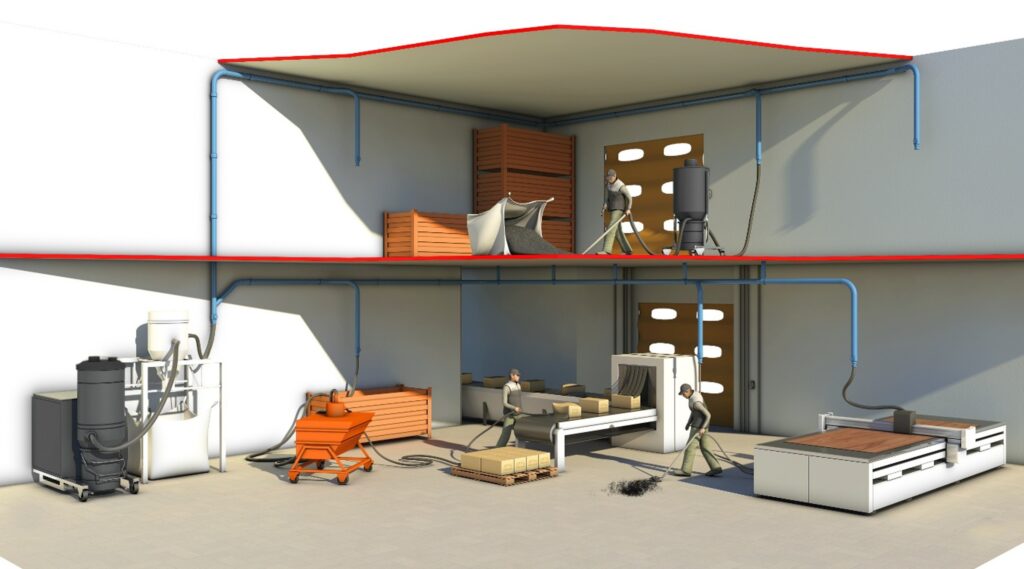
Industrial vacuum systems are used to remove dust, fine powders, flakes and other residual materials directly from the process or from working areas. They are typically applied in production zones where cleanliness, material recovery and operator safety are essential.
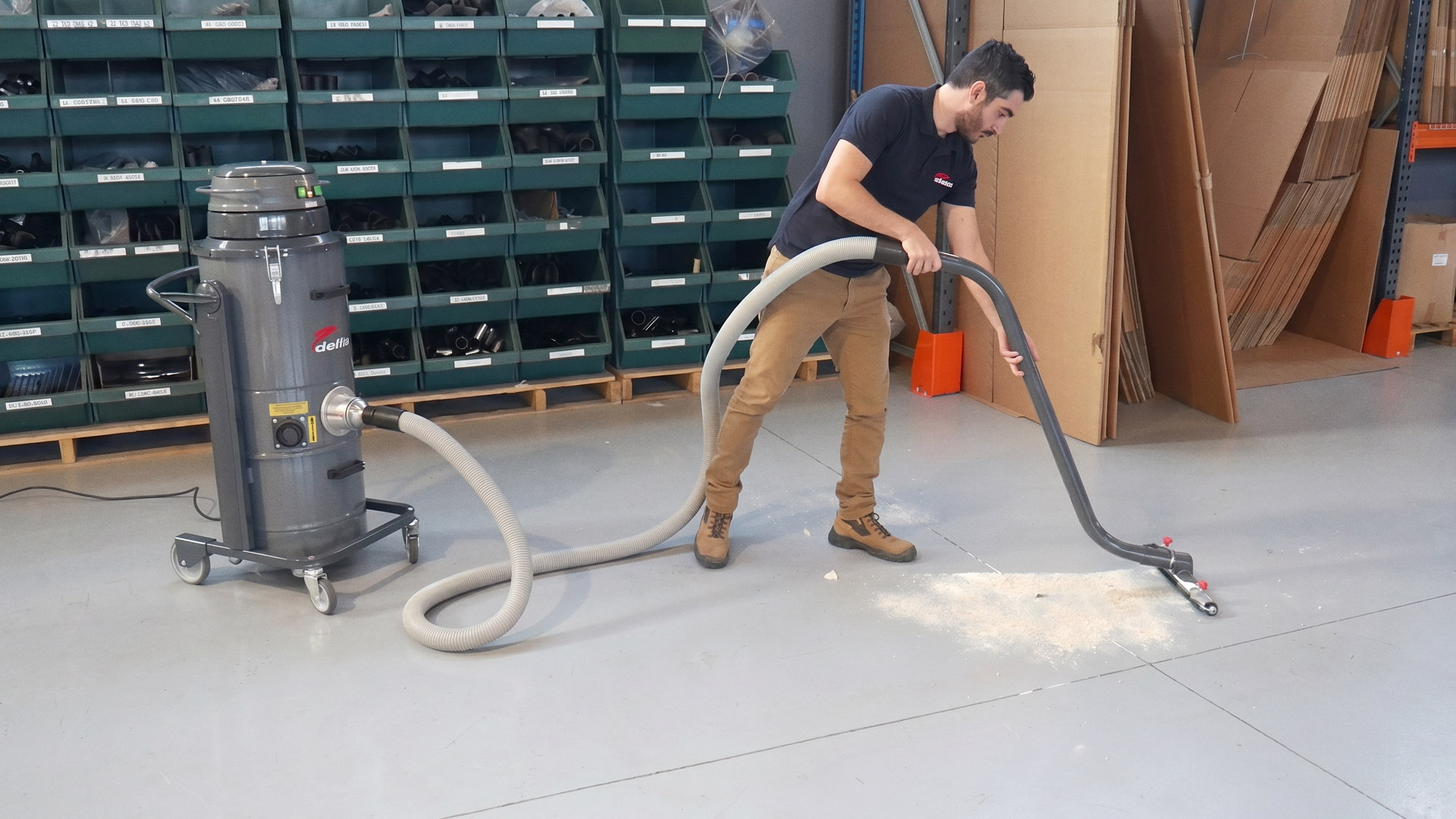
Designed for continuous or heavy-duty use, as local or centralized systems, these units can handle a wide range of materials, including very fine or hazardous dust, which involve ATEX executions and certifications. High-efficiency filtration systems ensure that even the smallest particles are captured, preventing them from being released back into the environment. Depending on the application, the equipment can be configured for dry or wet materials and adapted for explosive or sensitive environments.
Beyond basic cleaning, vacuum systems are often integrated into the process itself—for example, for extracting material from machines, transferring powders or maintaining clean working conditions around critical equipment.
They support a cleaner and more controlled working environment, especially in areas where dust accumulation can impact both operations and safety.
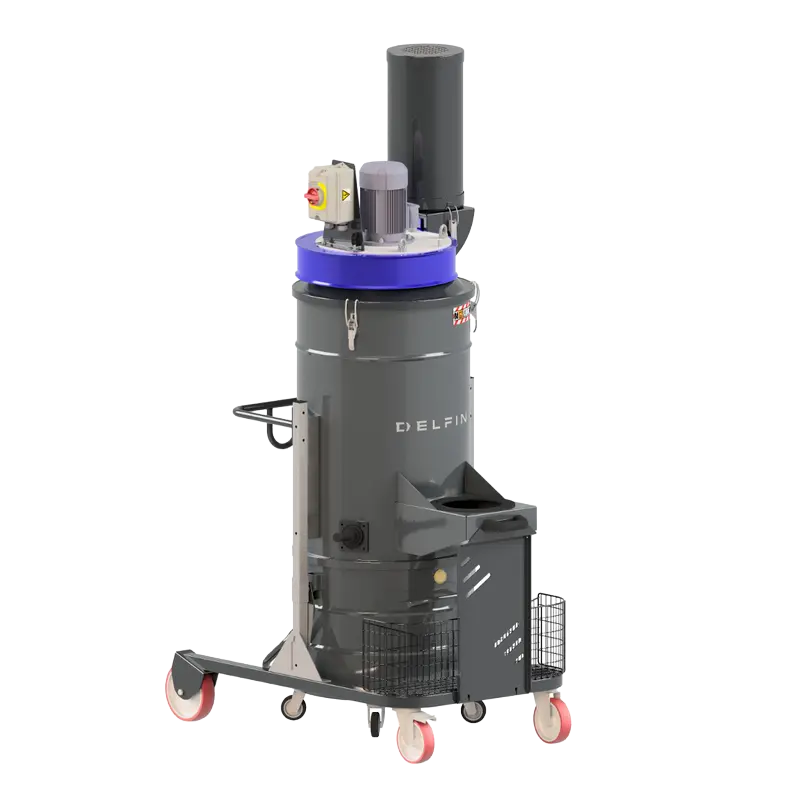
Industrial Vacuum Cleaners products
Industries we serve
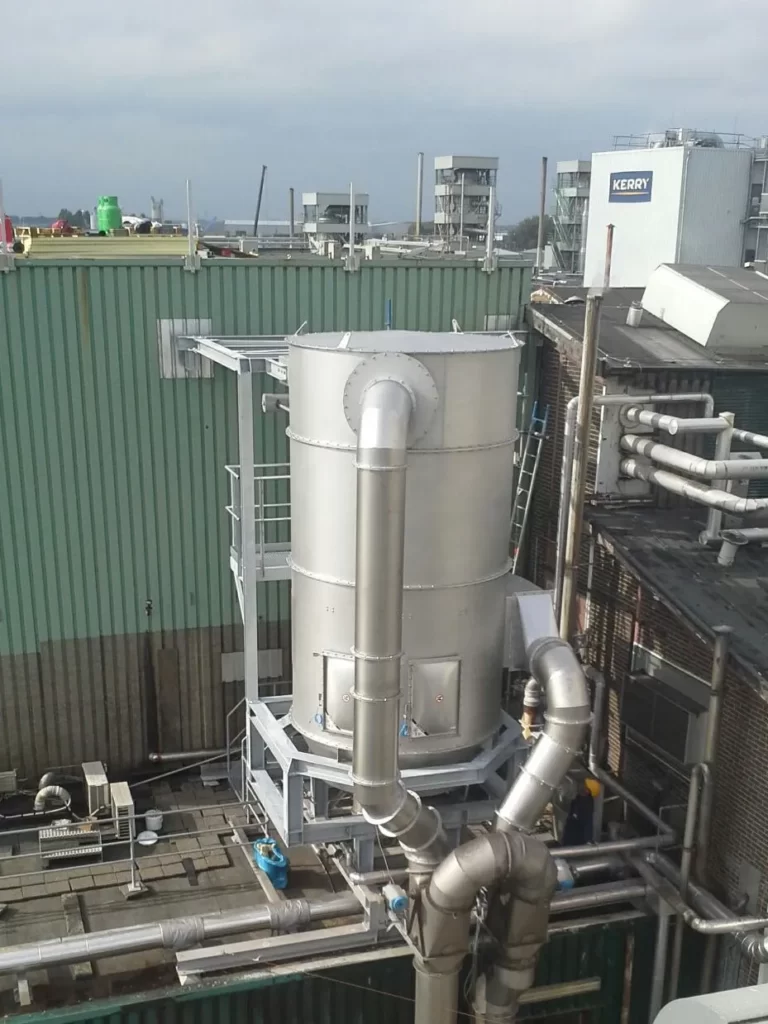
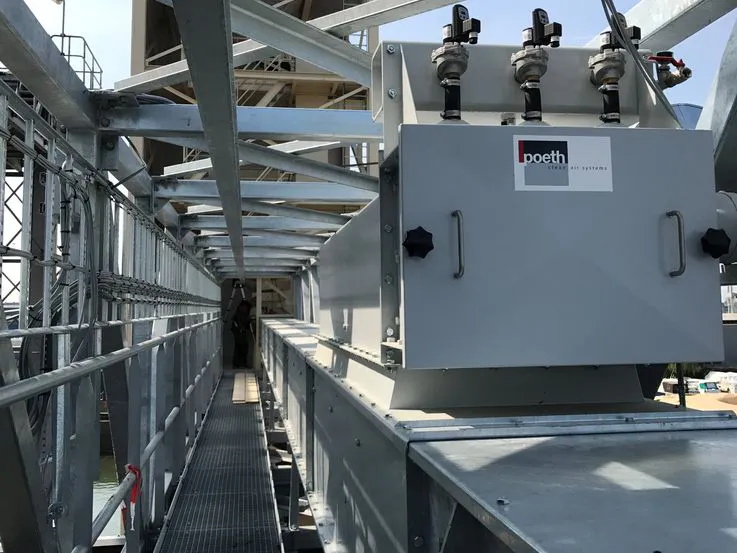
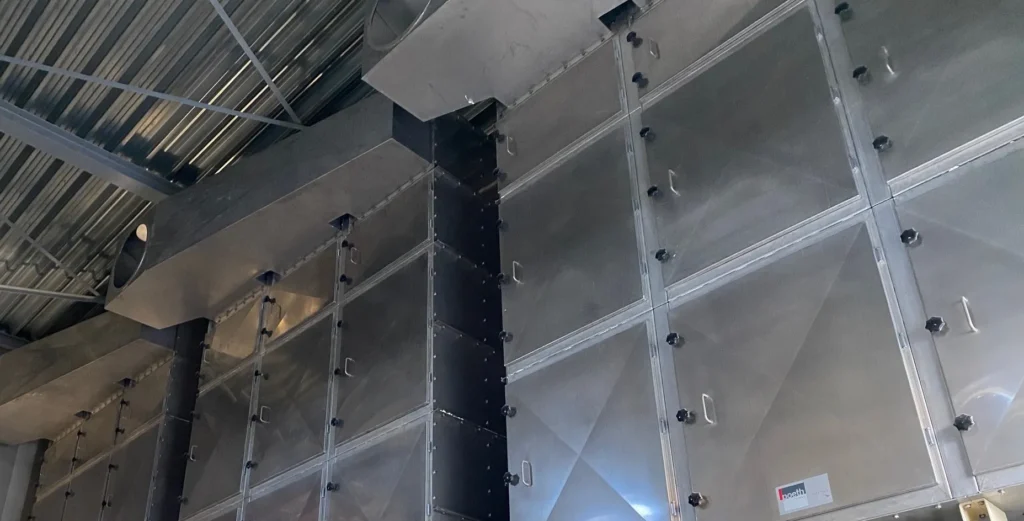
Dust filtration systems are implemented to capture and separate airborne particles generated during material handling and processing. They are typically installed at transfer points, dosing stations or conveying lines where dust emissions occur and need to be controlled at source.
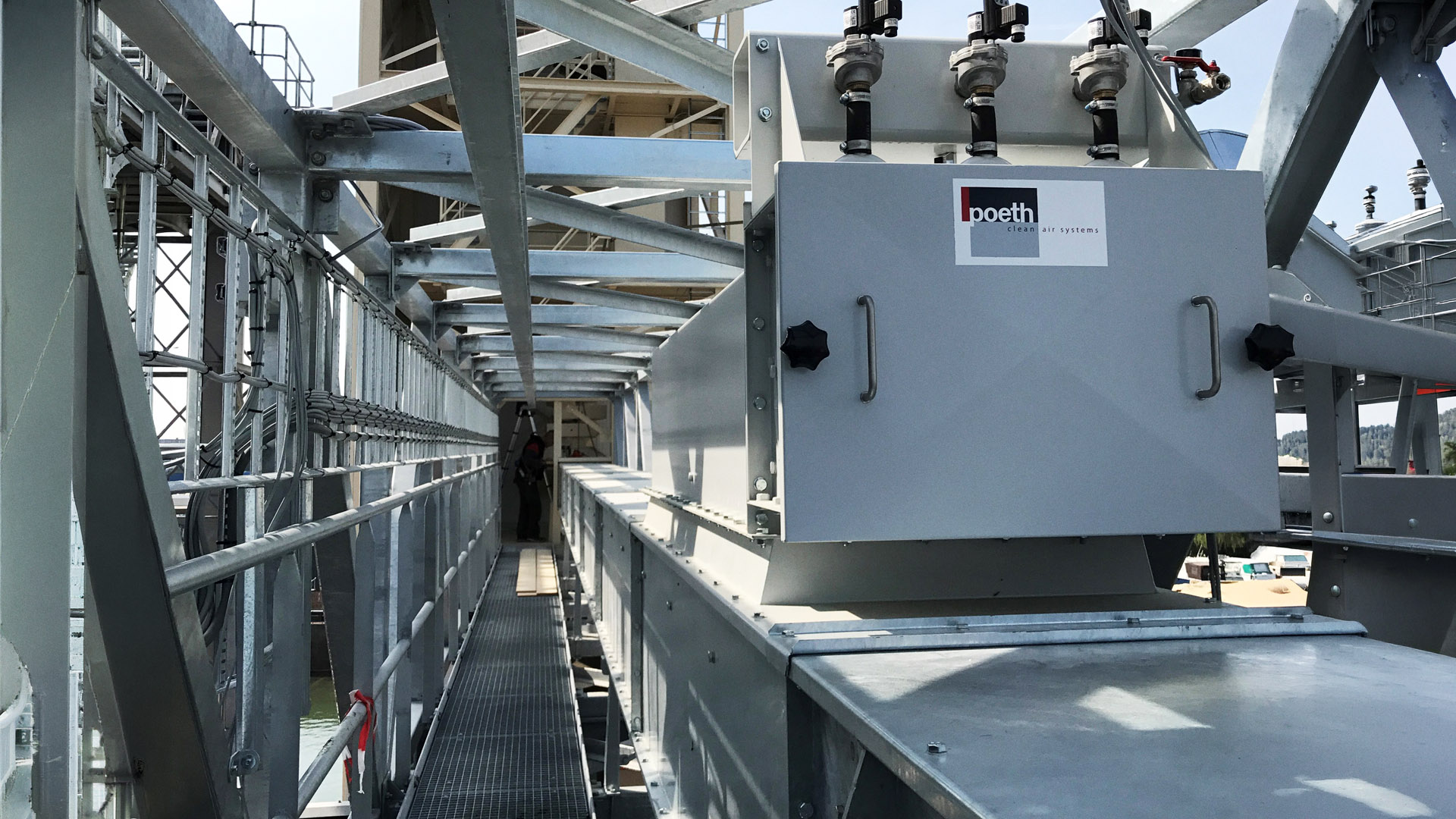
The filtration process is based on extracting the contaminated air through filter elements, where dust particles are retained. Depending on the application, units can be equipped with different filter media and cleaning mechanisms, such as pulse-jet systems or can be equipped with separate recipients for dust collection.
These systems are designed to handle a wide range of dust types, from fine powders to more abrasive particles, with attention to factors such as air volume, dust load and operational conditions. Proper sizing and configuration are essential to ensure effective separation without creating unnecessary pressure losses.
From an operational standpoint, they allow dust to be managed directly where it is generated, reducing its spread and keeping surrounding equipment and work areas under better control.
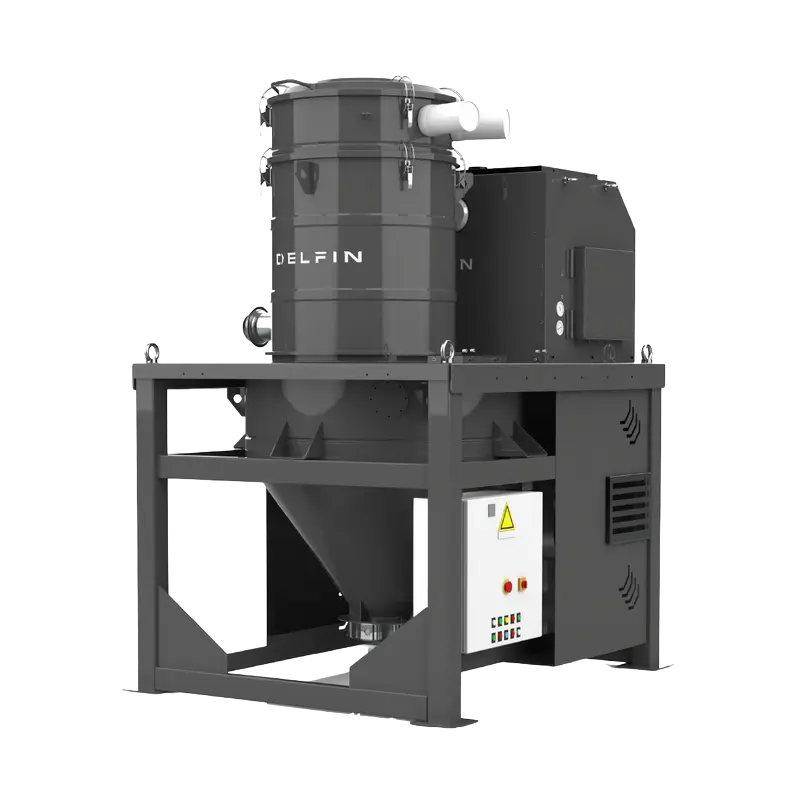
Dust Filters products
Industries we serve
Frequently Asked Questions
What is an industrial vacuum cleaner?
An industrial vacuum cleaner is a heavy-duty machine designed for continuous, demanding plant cleaning — recovering fine, hazardous or bulk-material spills from floors, conveyors and equipment. Unlike domestic or commercial vacuums, it offers high suction, advanced (HEPA/ULPA) filtration and ATEX options for hazardous dust.
What is the difference between an industrial vacuum and a dust collector (dust filter)?
An industrial vacuum is a mobile or centralized machine used to clean spills and recover material at the point of use. A dust collector (dust filter) is a fixed system that continuously captures airborne dust at the source — transfer points, silo vents, bagging stations — and filters the air, cleaning its filter elements automatically by pulse-jet.
How does a dust collector work?
Dust-laden air is drawn through filter elements — cartridges or fabric bags — where the dust collects on the media and falls into a hopper. Periodically, a burst of compressed air (pulse-jet / reverse-pulse) cleans the filters, so airflow and collection efficiency stay stable over time.
What is an ATEX vacuum and when do I need one?
An ATEX-certified vacuum is built to safely handle combustible or explosive dusts in classified zones — for example fine metal, sugar or flour. You need one wherever dust can form an explosive atmosphere; NFPA 652 is the equivalent combustible-dust standard in the US.
Which industries use industrial vacuums and dust filters?
They are used across food & dairy, pharmaceuticals, plastics, chemicals, recycling, building materials and metalworking — anywhere fine dust, material spills and air quality must be controlled for safety, hygiene and equipment protection.
Our Partners


















Contact Us
We look forward to discussing with you!