
INDUSTRIAL
TECHNOLOGIES
Our technology scope covers the entire bulk material handling process: raw material reception, silo unloading, conveying, separation, dosing and flow control, through to the final delivery of end products in small bags, big bags or by bulk loading into trucks.
See all Industrial Technologies

 Magnetic Separation Equipment

 Slide gates
 Rotary Valves

 Vibrating Equipment

 Weighing & Feeding Systems

 Mechanical & Pneumatic Conveying

 Vacuum Cleaners & Dust Filters

 Loading Chutes

 Filling & Emptying Systems

 Packaging, Palletizing, Wrapping Systems
Rotary Valves
Rotary airlock valves that meter and discharge bulk materials while maintaining a pressure seal in pneumatic conveying and dust collection systems.
Rotary valves, also known as rotary airlocks or rotary feeder, are used to control the continuous discharge and metering of bulk materials from hoppers, silos or cyclones, while maintaining a pressure or airlock seal between different process stages. They are widely applied in pneumatic conveying systems and dust collection installations where controlled material flow and air separation are critical.
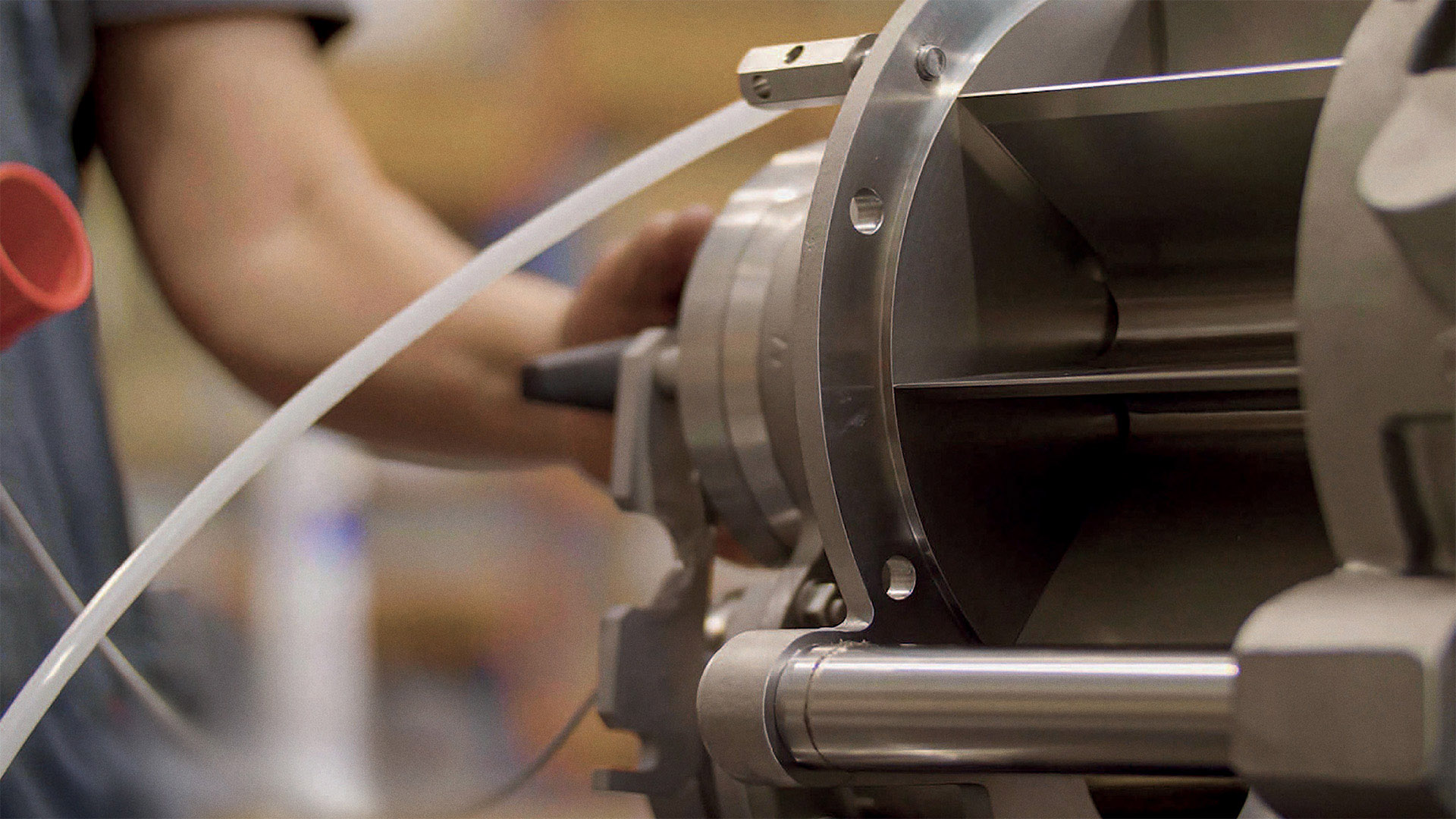
Engineered for a wide range of materials—from fine powders to granular products—rotary valves are available with various rotor designs, sealing solutions and wear-resistant materials to suit specific process conditions. Key parameters include throughput capacity, differential pressure, rotor speed and sealing efficiency. ATEX executions can be offered at request.
This results in controlled material transfer and effective separation between pressure zones, supporting stable operation of the overall process.
How a Rotary Valve Works (the airlock function)
The airlock / rotary valve consists of a rotor with multiple pockets rotating within a close-tolerance housing, seals and drive. As the rotor turns, material is captured in the pockets and transferred from the inlet to the outlet, ensuring a steady and controlled feed while minimizing air leakage across pressure differentials.
Types of Rotary Valves
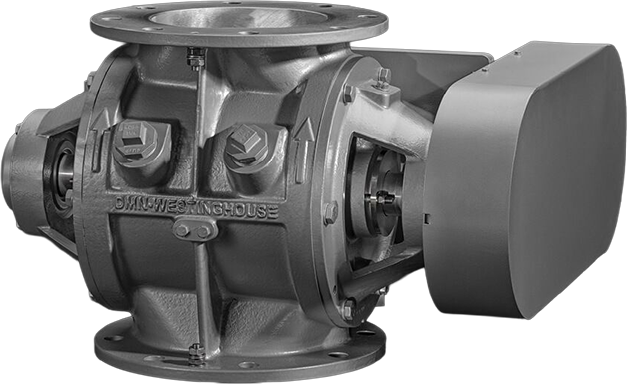
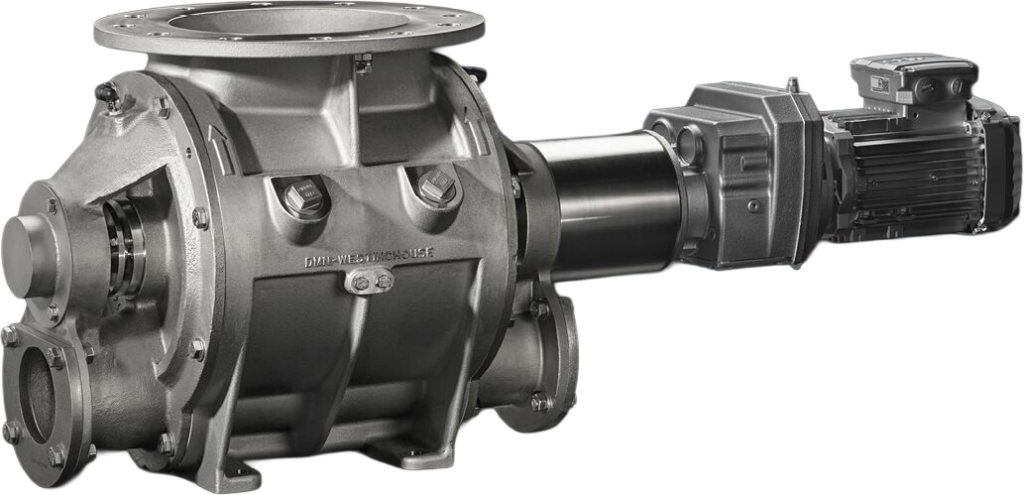
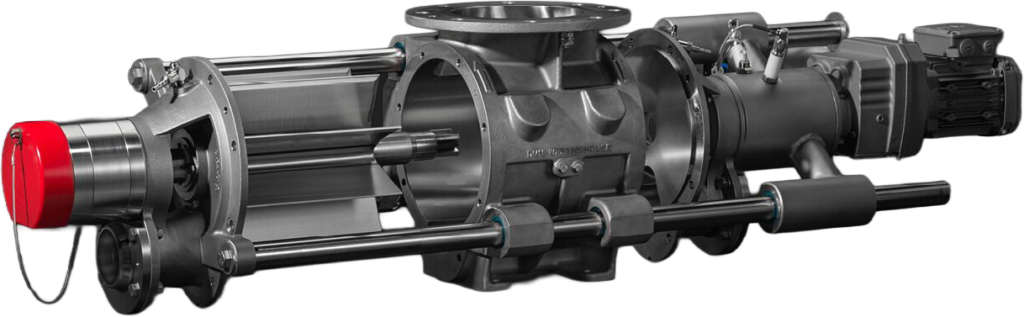
Rotary valves / airlock valve include drop-through and blow-through designs, medium- and heavy-duty versions, sanitary quick-clean models, dust-filter valves, and options for high temperatures, abrasive materials and ATEX or explosion-protected applications.
How to Select a Rotary Valve
Rotary valve selection starts with matching throughput, differential pressure & rotor speed to the required capacity and operating conditions. Sealing efficiency, particle size & material behaviour must also be considered to limit leakage, prevent blockage or product damage, and maintain reliable feeding.
Applications
Hopper & Silo Discharge, Free-Fall / Gravity Feeding, Pneumatic Conveying Lines, Dust-Collector & Filter Discharge, Weighing & Dosing Systems, Transfer & Isolation Points.
Rotary Valves products
Industries we serve
- Food & Dairy
- Grains, Feed & Petfood
- Plastic & Rubber
- Chemicals & Fertilizers
- Recycling
- Building Materials
Frequently Asked Questions
What is a rotary valve?
A rotary valve — also known as a rotary airlock or rotary feeder — is a mechanical device that meters and discharges dry bulk materials from silos, hoppers and cyclones while maintaining a pressure or airlock seal between process stages. A vaned rotor in a close-tolerance housing carries material from inlet to outlet.
How does a rotary valve work?
Material enters the inlet and fills the pockets of a rotating vaned rotor; as the rotor turns, each pocket carries the material to the outlet and discharges it, while tight rotor-to-housing clearances and seals minimise air leakage. This lets the valve pass material continuously while holding the pressure differential between the two sides.
What is the difference between a drop-through and a blow-through rotary valve?
In a drop-through valve, material falls by gravity through the valve into the line or vessel below. In a blow-through valve, the conveying air passes through the valve body and sweeps the material directly into the pneumatic line — useful for light, sticky or aeratable products that don't discharge cleanly by gravity.
What is a rotary airlock and why is it needed?
"Rotary airlock" describes the valve's sealing role: it maintains the pressure or vacuum difference between two zones — for example beneath a cyclone or filter, or feeding a pressurised conveying line — while still allowing material to pass. This prevents air leakage, protects conveying efficiency and keeps the process stable.
Can rotary valves handle abrasive or high-temperature materials?
Yes. For abrasive products, valves use wear-protected internals (hard-chrome, tungsten-carbide or ceramic linings) and reinforced rotors; high-temperature seals and materials handle hot materials, and ATEX executions are available for explosive dusts. ROCOM specifies the rotor, sealing and clearances to suit the material.
Our Partners


















Contact Us
We look forward to discussing with you!