
INDUSTRIAL
TECHNOLOGIES
Our technology scope covers the entire bulk material handling process: raw material reception, silo unloading, conveying, separation, dosing and flow control, through to the final delivery of end products in small bags, big bags or by bulk loading into trucks.
See all Industrial Technologies

 Magnetic Separation Equipment

 Slide gates

 Rotary Valves
 Vibrating Equipment

 Weighing & Feeding Systems

 Mechanical & Pneumatic Conveying

 Vacuum Cleaners & Dust Filters

 Filling & Emptying Systems

 Loading Chutes

 Packaging, Palletizing, Wrapping Systems
Vibrating Equipment
Industrial vibrating machinery — vibrating screens, feeders and conveyors that feed, screen, convey and discharge bulk materials using unbalanced or electromagnetic drives.
We provide vibrating equipment designed to extract, feed, screen, convey and discharge materials reliably through the production line.
Types of Vibrating Equipment
Types of vibrating equipment include Rectangular Vibrating Screens for linear separation, Circular Vibrating Screens (Separators & Sieves) for classification, Vibrating Feeders for controlled dosing and Vibrating Conveyors for consistent material transfer.
How Vibrating Equipment Works — Drive Types
Utilizing unbalanced motors or electromagnetic drives, the machines generate controlled mechanical movement to handle everything from fine powders to heavy, abrasive bulk materials. This vibration keeps the material moving uniformly across the surface, which prevents blockages and keeps the flow consistent without clogging or stalling the process.
How to Select Vibrating Equipment
Selecting vibrating equipment starts with particle size, throughput & screening cut, which define screen area, deck configuration and required capacity. Material Behaviour, Hygiene & ATEX then guide the choice of construction, drive type, surface finish and protection measures for safe, reliable operation.
Applications
Hopper & Silo Discharge, Controlled Feeding to Process Equipment, Screening & Classification Lines, Conveyor Transfer Points, Dosing & Weighing Systems, Product Distribution & Collection Points.
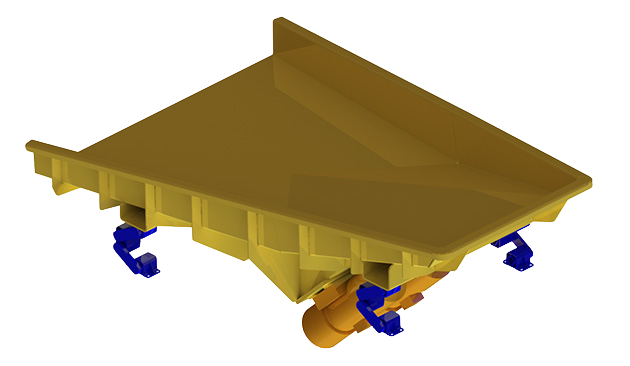
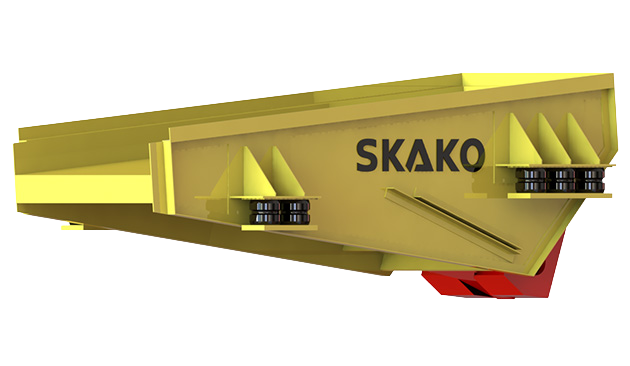
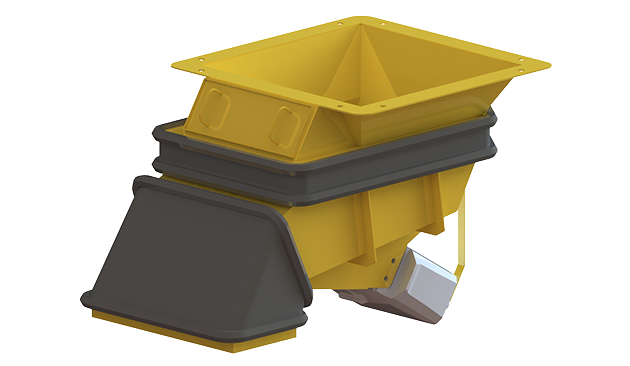
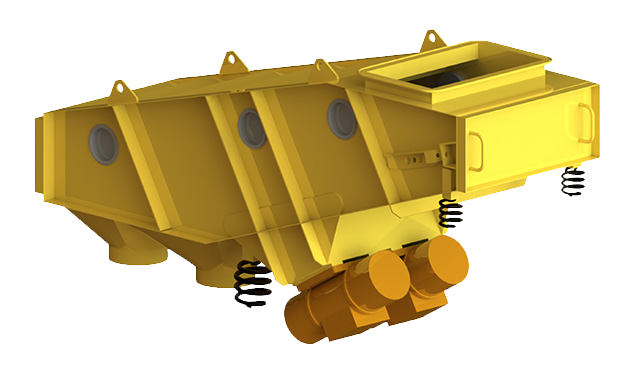
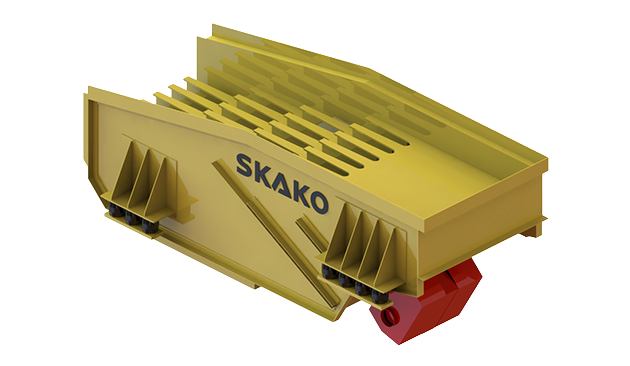
Feeders and conveyors handle the movement of bulk materials from one point to another, ensuring a steady and controlled flow throughout the process. They are typically installed under silos, hoppers or along production lines to feed equipment and keep material moving in a controlled way.
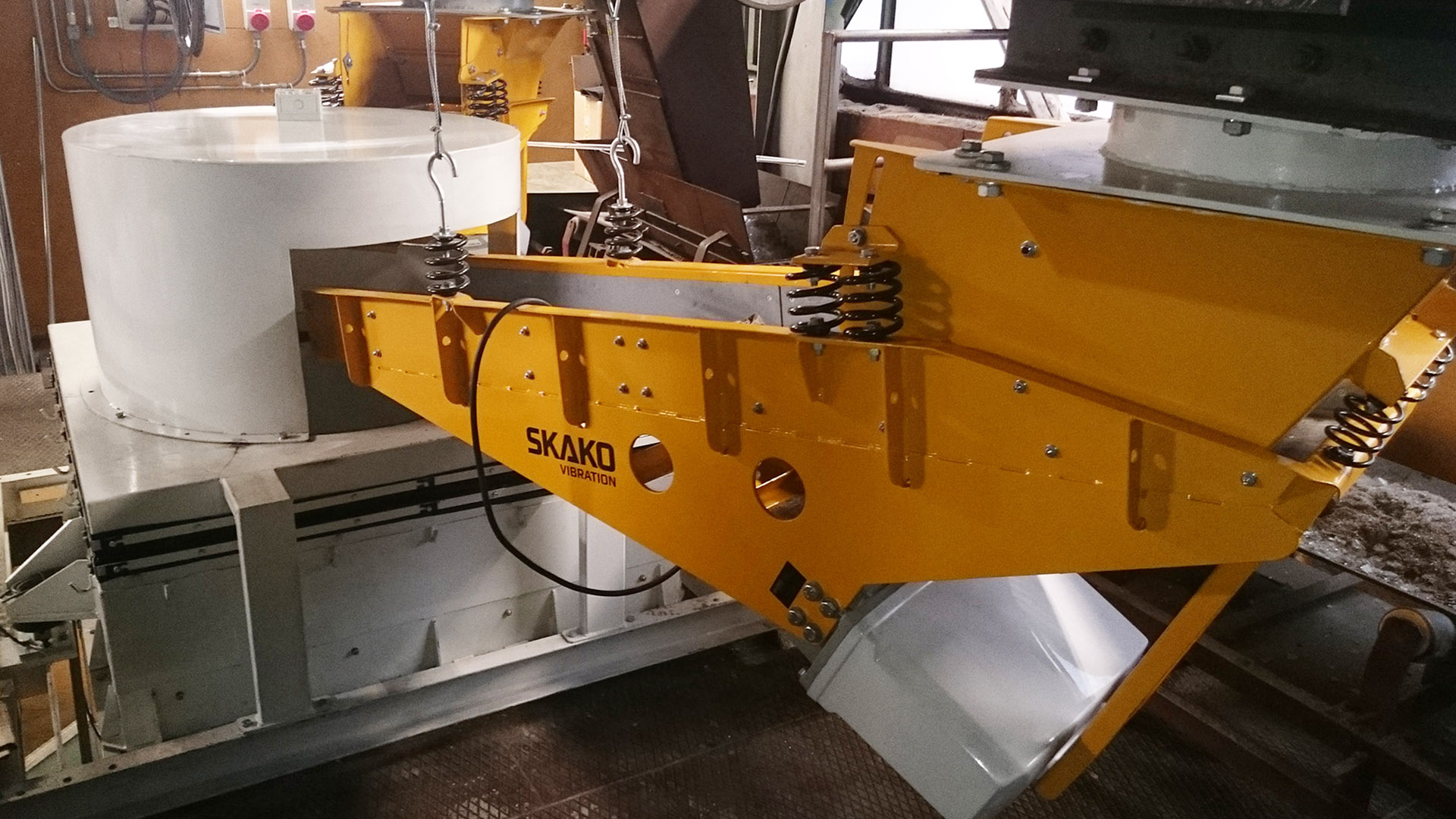
Using controlled vibration, the material is moved forward in a consistent, uniform layer, which allows for accurate dosing and avoids blockages or irregular flow. This is especially useful when working with powders or materials that tend to compact or bridge.
Depending on the layout, the equipment can be adapted in length, width and capacity to match the required throughput and available space. These feeders or conveyors are frequently used to ensure a correct feeding of product into downstream equipment such as screening equipment or other process equipment.
In daily operation, these systems help keep the process stable by delivering material at a constant rate and reducing manual intervention.
Feeders & conveyors
Industries we serve
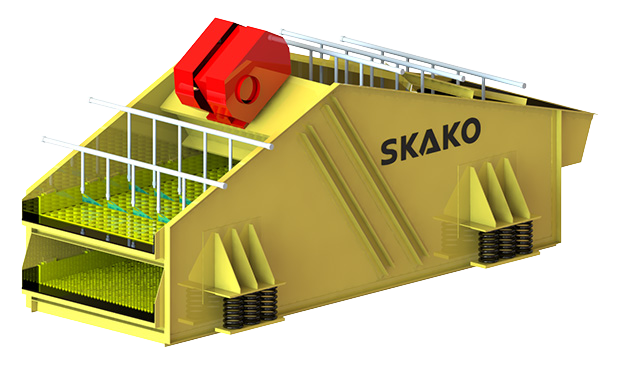
These vibrating screens are designed for reliable classification and separation of bulk materials in continuous industrial processes, including heavy duty ones. Built based on extensive experience in vibratory equipment, these units ensure stable material movement across the screening surface, even in very demanding operating conditions.
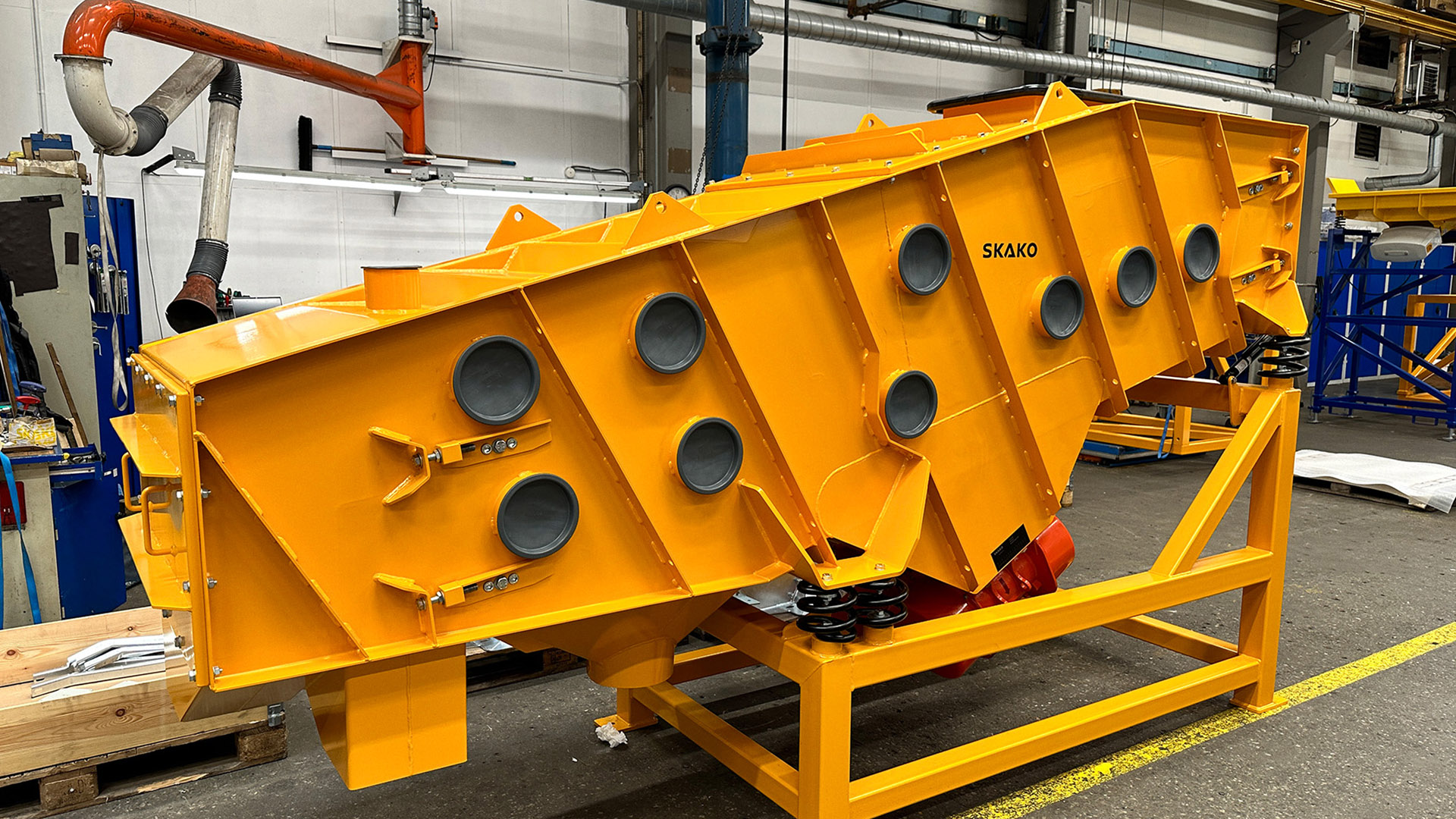
The screening effect is achieved through controlled vibration, generated by precisely engineered drive systems (electromagnetic, motovibrator or exciters), which keep the material in constant motion. This approach not only improves separation efficiency, but also reduces the risk of clogging, especially when handling difficult or slightly moist materials.
The vibrating screens can be configured with multiple decks and adapted screening media, allowing for accurate separation into different particle sizes within a single unit. Their robust construction and balanced vibration design contribute to low maintenance requirements and long operational life.
In practice, these systems are often positioned at key points in the process where product quality needs to be controlled, ensuring that only material within the required specification moves forward.
Rectangular Screens products
Industries we serve
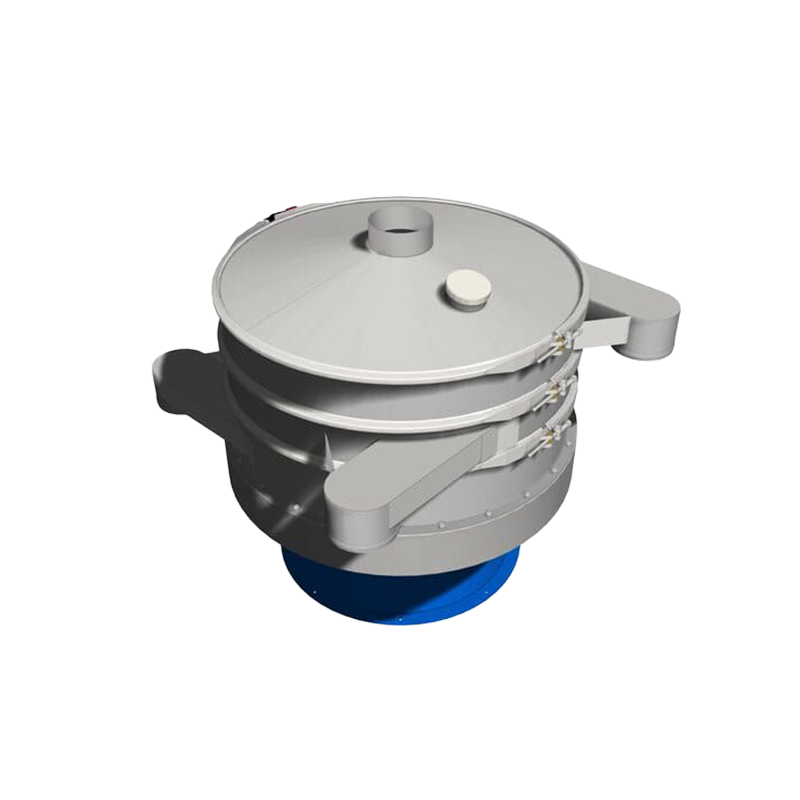
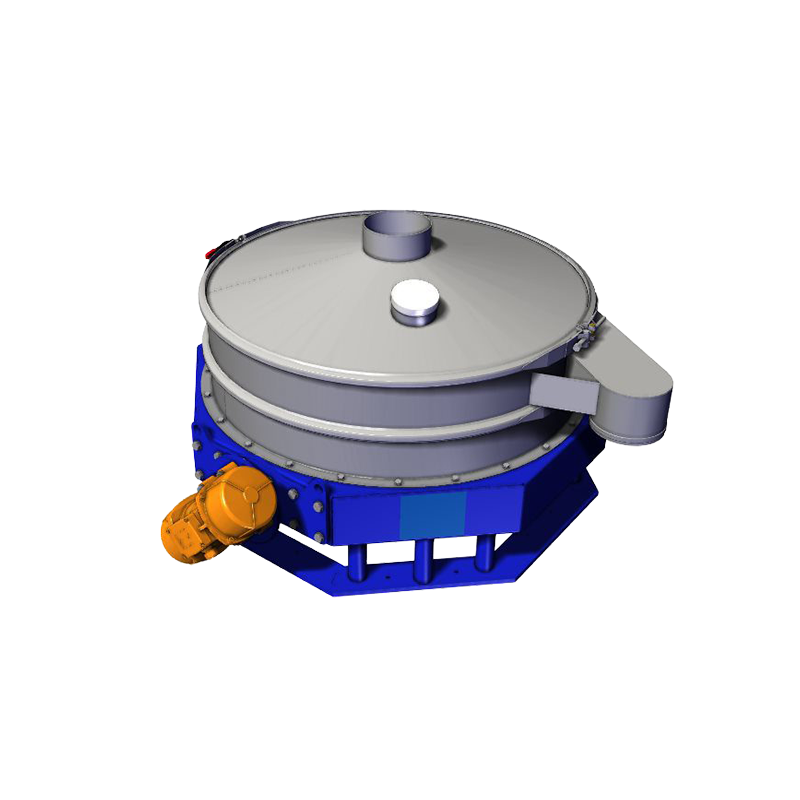
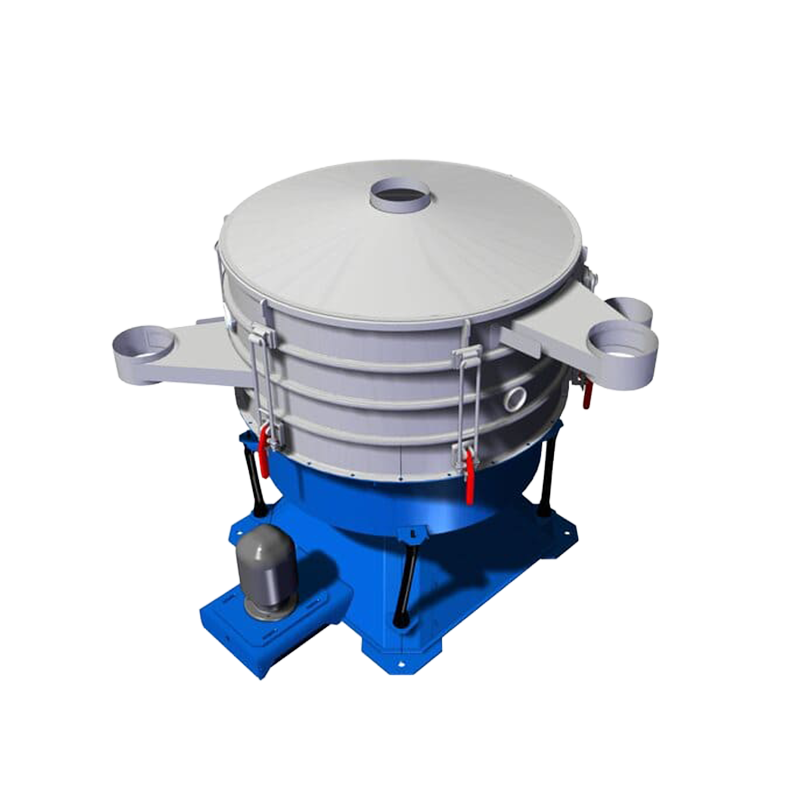
Circular screens are typically used where fine and precise separation is required, especially for powders and small granular materials in industries like food, chemical, plastics and others. Their compact, enclosed design makes them suitable for applications where dust control, hygiene and consistent product quality are important. They are also frequently used in ATEX environments.
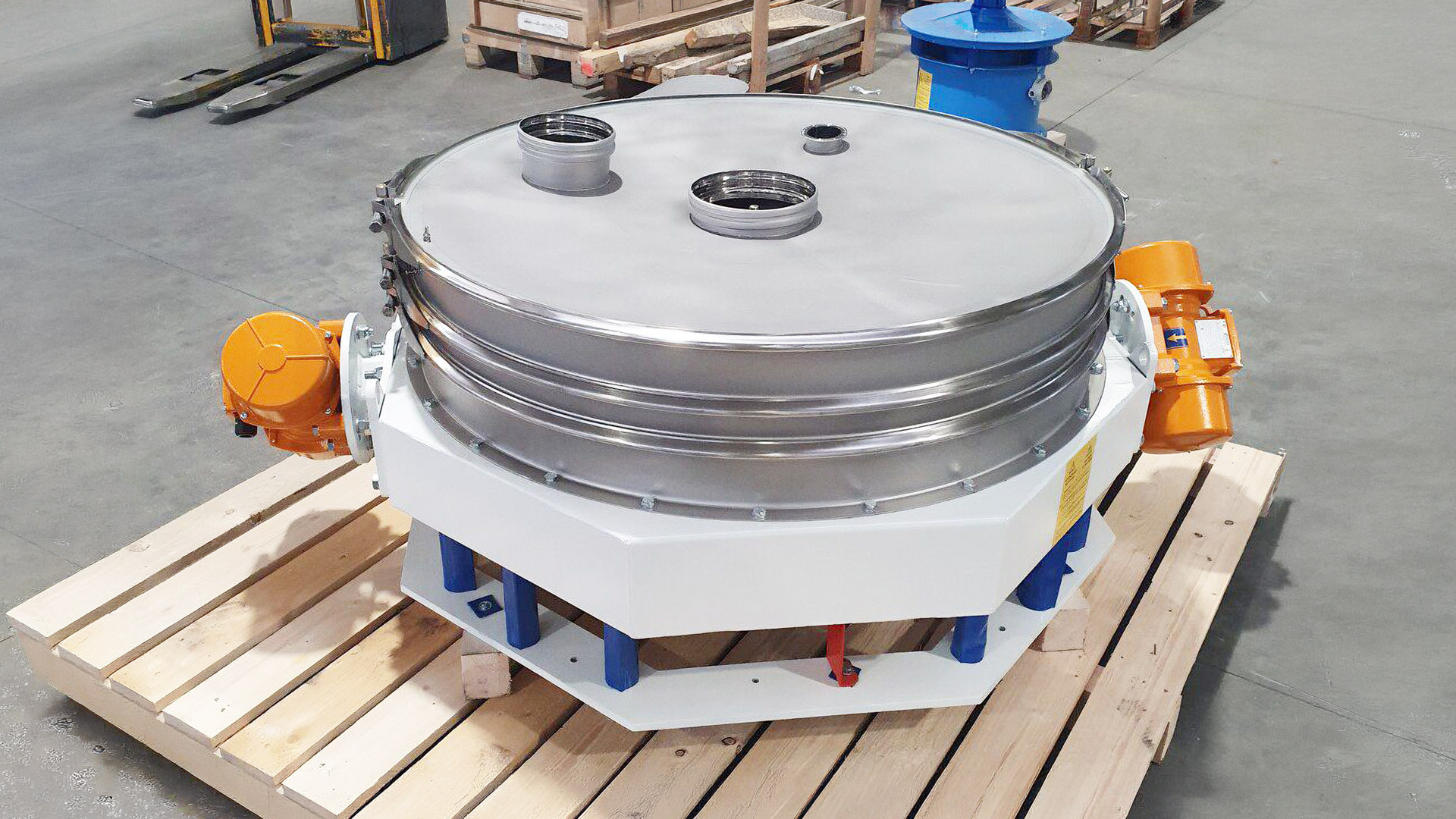
The screening is achieved through a circular vibratory motion that distributes the material evenly across the mesh. As the material moves from the center towards the periphery, particles are separated according to size, with finer fractions passing through the screen while oversized material is discharged separately.
These units can be equipped with multiple screening decks, allowing several size separations within a single machine. At the same time, the mesh and vibration settings can be adjusted depending on the product characteristics and required cut point.
In practice, circular screens are often used for final product control or safety screening, where stable and repeatable results are needed without complex setup or constant operator intervention.
Circular screens products
Industries we serve
Frequently Asked Questions
What is vibrating equipment?
Vibrating equipment uses controlled vibration — from unbalanced motors or electromagnetic drives — to feed, screen, convey, extract and discharge bulk materials with fewer moving parts than belt systems. It moves material uniformly across the surface, preventing blockages and keeping flow consistent. ROCOM supplies vibrating screens, feeders and conveyors.
How does a vibrating screen work?
A vibrating screen distributes material across a mesh or perforated deck; particles smaller than the aperture pass through while oversize material discharges separately. Multiple decks allow several size cuts in a single machine, with the vibration preventing the mesh from blinding.
What is the difference between an unbalanced-motor and an electromagnetic feeder?
Unbalanced (brute-force) feeders use rotating eccentric weights to generate vibration for high-capacity, continuous material flow. Electromagnetic feeders use a fast-acting electromagnetic drive for precise, easily controlled dosing — ideal for accurate metering of powders and fine materials.
What is the difference between a linear and a circular vibrating screen?
Linear (rectangular) screens move material in a straight line across one or more decks for high-capacity classification and heavy-duty separation. Circular screens use a circular vibratory motion for fine, precise separation in a compact, enclosed unit — well suited to hygienic and ATEX applications and safety/control screening.
Can vibrating equipment handle wet, sticky or abrasive materials?
Yes. With the right drive, deck or mesh selection, wear-resistant surfaces and, where needed, enclosed/hygienic or ATEX designs, vibrating equipment handles everything from fine powders to wet, sticky or heavy abrasive bulk materials.
Our Partners


















Contact Us
We look forward to discussing with you!