
INDUSTRIAL
TECHNOLOGIES
Our technology scope covers the entire bulk material handling process: raw material reception, silo unloading, conveying, separation, dosing and flow control, through to the final delivery of end products in small bags, big bags or by bulk loading into trucks.
See all Industrial Technologies

 Magnetic Separation Equipment

 Slide gates

 Rotary Valves

 Vibrating Equipment

 Weighing & Feeding Systems

 Mechanical & Pneumatic Conveying

 Vacuum Cleaners & Dust Filters

 Filling & Emptying Systems
 Loading Chutes

 Packaging, Palletizing, Wrapping Systems
Loading Chutes
Dust-controlled telescopic chutes that load dry bulk materials into open trucks, tankers, rail wagons, barges and ships.
Loading chutes, also known as telescopic loading spouts or loading bellows, are used to transfer bulk materials into open trucks, tanker trucks, rail wagons or barges in a controlled and contained way. Their role is not just to guide the material, but also to limit dust emissions and material loss.
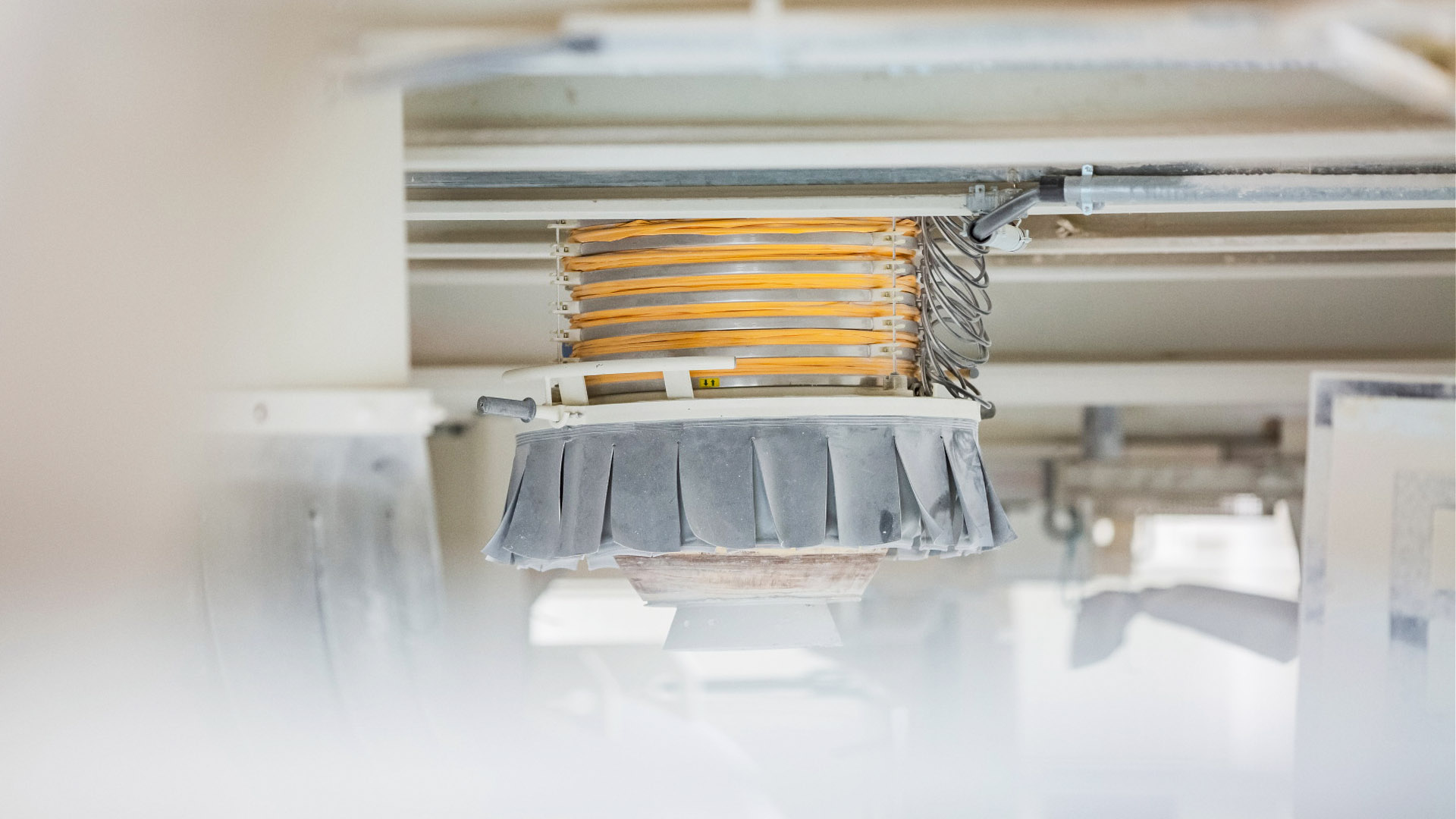
Depending on the application, loading chutes can be equipped with dust control features such as integrated filtration or aspiration connections. This makes them suitable for handling fine powders as well as granular products, or even coarse minerals, in environments where dust limitation and environmental compliance are important.
In practice, they simplify loading operations by limiting dust emissions and allowing operators to position the chute accurately and maintain a steady, controlled flow until the filling process is complete.
How Telescopic Loading Chutes Work
The system typically consists of a telescopic modular chute that can be extended and positioned according to the filling height. As material flows downward by gravity, the design helps reduce impact and ensure a good separation between product and air, so that dust can be efficiently captured and extracted by an integrated or external filter.
Open vs Enclosed Loading Spouts
Loading chutes can be designed in 2 main configurations that cover different vehicle and dust-control needs. Open truck & railcar loading spouts support bulk loading into open vehicles, while enclosed / sealed tanker loading spouts connect directly to tanker inlets for contained, controlled and dust-reduced transfer.
Dust Control & Environmental Compliance
Loading bellows can be featured with integrated dust collection & aspiration to control airborne dust during loading. Level sensors & spout positioners support accurate filling and correct spout placement, helping maintain cleaner, safer and more controlled bulk material transfer.
Applications
Bulk Loading of Open Trucks & Tankers trucks, Rail Wagons, Barges & Ships.
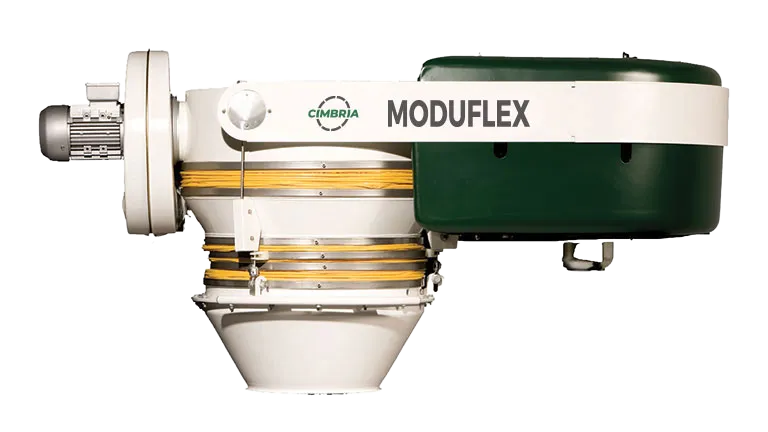
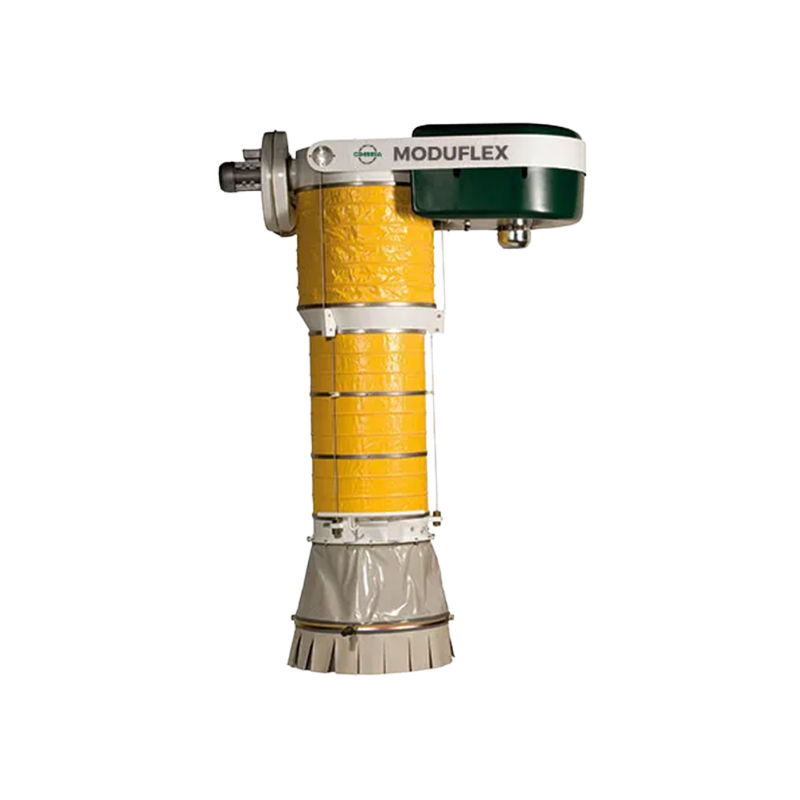
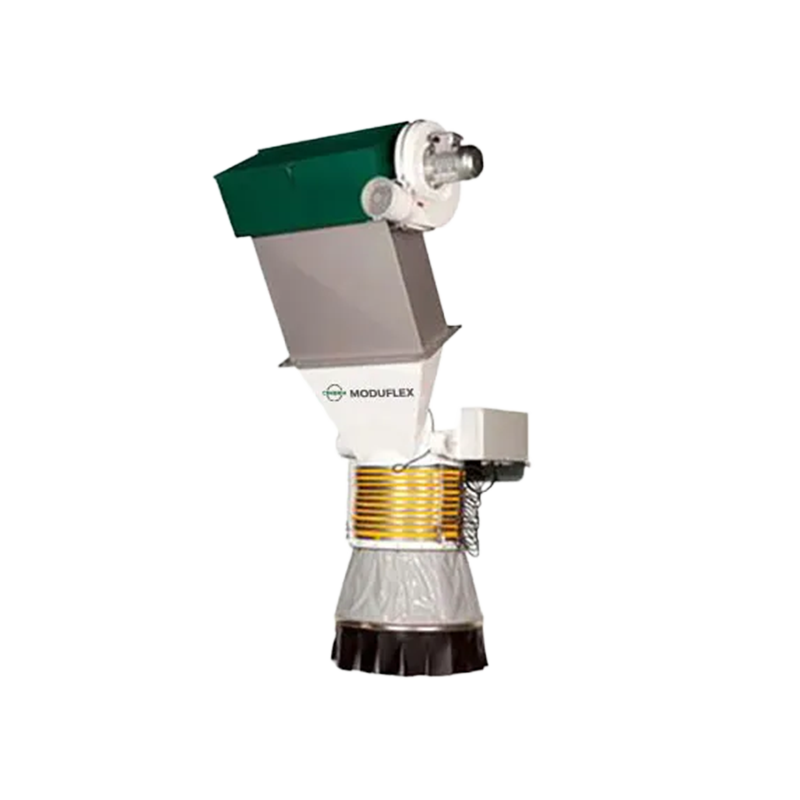
Loading Chutes products
Industries we serve
- Food & Dairy
- Grains, Feed & Petfood
- Plastic & Rubber
- Chemicals & Fertilizers
- Recycling
- Building Materials
Frequently Asked Questions
What is a loading spout?
A loading spout — also called a loading chute or loading bellows — is a telescopic chute fitted under a silo, hopper or conveyor that loads dry bulk materials into open trucks, tankers, rail wagons, barges and ships while controlling dust. It extends and retracts to the filling height.
What is the difference between an open and an enclosed loading spout?
An open loading spout loads open or covered vehicles (trucks, railcars, stockpiles) using an outer dust skirt and an integrated dust collector. An enclosed (closed) loading spout seals against a tanker or silo inlet for fully contained, dust-free loading of sealed vehicles.
How does a loading chute control dust?
A double-cone design (inner cone for material flow, outer cone for aspiration) plus a dust skirt at the outlet keep material contained, while an integrated or external filter extracts the displaced dusty air. Level sensors stop and retract the spout when the vehicle is full.
What materials can a loading spout handle?
Loading spouts handle fine powders, granules and coarse minerals — cement, flour, sugar, grain, sand, fertilizer, plastics and coal — with wear-resistant options for highly abrasive materials.
What can a telescopic loading chute load into?
Open and covered trucks, tanker trucks, rail wagons, barges, ships and open stockpiles — with the chute extended and positioned to the required filling height.
Our Partners


















Contact Us
We look forward to discussing with you!